15.1.08

OK. Now for the other list. I've got a little bit different format for this one this year. All of the books list were published, either in paperback or hardcover, in 2007. Now, obviously all of the books I read this year weren't published this year, and I've always been a little annoyed about not being able to put the books I really liked from the year before on the list just because I didn't get around to reading them right away (Millennial Monsters by Anne Allison and Hip-Hop Japan by Ian Condry are two good example from 2006). So this list will have my favorite six non-fiction books, followed by the ever popular top four coffee table books, followed by the top seven books I'm looking forward to reading, but haven't yet. So here it is, the top seventeen of 2007.

The Best Non Fiction of 2007!!!

#1: The Warhol Economy: How Fashion, Art and Music Drive New York City by Elizabeth Currid.

So #1 is a planning book, in what seemed like a pretty weak year for planning books. Currid's research takes up some of the important questions that were left in Richard Florida's Creative Class work, but on a more sociological level, rather then macro-economic. It also relates to Lloyd's NeoBohemia, but more from a public policy standpoint. The book is basically about the economic benifits of the arts in the urban economy.

#2: Parallel Paths: The Development of Nationalism in Ireland and Quebec by Garth Stevenson.

Parallel Paths traces the development of modern Québécois and Irish nationalism in overlapping chapters that seek to explain why Ireland became independant while Québec has remained withing the Canadian federation. It's one of the most readible histories of Québec I've ever read (and I've read a freaking lot of histories of Québec) with the bonus of some great Irish history mixed in. It was published in Canada so it's a little tough to find, but very worth it.

#3: No One is Illegal: Fighting Violence and State Repression on the US-Mexico Border by Mike Davis and Justin Akers Chacón.

This was one of Mike Davis' three books this year. He's awesome. This one has a really great history of immigration in the US with a focus on the way that business interests benifit by keeping labor divided into legal and illegal groups who are constantly at odds with each other. The second half focuses on the tiny vigilante groups like the Minutemen and how they manage to dominate so much of the media discourse surrounding the immigration debate.

#4: The Story of French by Jean-Benoit Nadeau and Julie Barlow.

These two Québecois writers take on the the history of the French language. This was the Governor-General's Prize winner for non-fiction this year. It's very accessible, even if you aren't a Francophone. And if you are a Francophone there is a lot of interesting little tidbits about the origins of some of your favorite words: for example, poutine comes from the english word pudding.

#5: Evil Paradises: Dreamworlds of Neoliberalism edited by Mike Davis and Daniel Bertrand Monk.

Here's the second Mike Davis book of the batch. This one is a serious of academic papers regarding the role of neoliberal economics on urban form, from the megamalls of Dubai to little California suburbs in the deserts of Iran. Since there are a lot of different authors, the chapters very pretty widly in topic and quality, but there is a little bit of something for everyone (or at least everyone who is into history, urban planning, architecture or sociology).

#6: The Suburbanization of New York edited by Jerilou Hammett, Kingsley Hammett and Martha Cooper.

Book 6 is another planning anthology. A lot of it relates to the losses of ethnic, social and economic diversity NYC and the proliferation of suburbanesqe chains. It's a pretty interesting way to look at the booms of inner-city gentrification around the country. In the end it begins to ask the question: If urban life becomes the new American dream, does that mean that there must simply be a reversal of the former status quo (ie richer and whiter in the center, poorer and darker on the periphery) or does the move to reurbanization also have possibilities for unification across class and color lines.

The Best Coffee Table Books of 2007!!!

#1: Transit Maps of the World by Mark Ovenden and Mike Ashworth.

A collection of every urban transit map in the world? Hell, yeah. The book also nicely outlines the evolution of the design of these important maps throughout time. Did you know Montréal is one of the only cities in the world with a black background on it's transit maps?

#2: Design Like You Give a Damn by Architecture for Humanity.

A very cool book with tons of architectural projects all over the world, from Darfur to New Orleans. The architecture is amazing and the social relevance is great. It's a wonderful organization and a great book.

#3: Imagining MIT by William J. Mitchell.

My Boston pick for the year, this goes over the evolution of MIT's campus focusing on the recent spate of building, including Gehry's Stata Center, Kevin Roche's Zesiger Sports and Fitness Center, Steven Holl's Simmons Hall, Charles Correa's Brain and Cognitive Science Complex, and Fumihiko Maki's Media Laboratory. Lots of very cool architecture in good photographs.

#4: Robert Moses and the Modern City edited by Hillary Ballon and Kenneth T. Jackson.

This book grew out of several different museum exhibits around New York last year. For anyone who doesn't know, Robert Moses is the person who is probably most resposible for New York's urban form, for better and worse. In fact, there are probably few people in American history who are as responisible for a city (save maybe for Alan Jacobs in San Francisco and L'Enfant in DC). It's a great book.

The Best(?) Books I Haven't Read Yet of 2007!!!

#1: greenTOpia: Towards a Sustainable Toronto edited by Alana Wilcox, Christina Palassio and Jonny Dovercourt
#2: Lagos: How It Works by Rem Koolhaas
#3: Diamonds, Gold and War: The British, the Boers, and the Making of South Africa by Martin Meredith
#4: Fidel Castro: My Life: A Spoken Autobiography by Ignacio Ramonet and Fidel Castro
#5: India After Gandhi: The History of the World's Largest Democracy by Ramachandra Guha
#6: Zhou Enlai: The Last Perfect Revolutionary by Gao Wenquin

Read more...

2.1.08

Every year I think I'm going to beat Ryan to the end of the year list thing, but I always seem to get busy in the last week of the year. oh well. So anyways, here's my first list:

The Best Fiction of 2007!!!

Now, I actually read a lot more fiction this year, so I think it's a better list. Here's my top five novels:

#1: The Brief Wonderous Life of Oscar Wao by Junot Díaz.

This was my favorite. It's the story of the world's only Domincan nerd. It's written in a Jersey Spanglish with a very lyrical, almost conversational style. The little footnotes on Domincan history are hilarious ("Trujillo was Mobuto before Mobuto was Mobutu").

#2: After Dark by Haruki Murakami.

Murakami is my current favorite all-time author, and this was his new book this year. It is the story of a couple of sisters over the course of one night, one pulling a wierd all-nighter in a diner, the other in some kind of metaphysical coma. It's a short book, but you'll be thinking about it for quite awhile.

#3: I Have the Right to Destroy Myself by Young-ha Kim.

This is a last minute addition to my list. I finished it today. I picked it up on my theory that, since only 3% of the books publised in English are translations, that most books that are translated are probably pretty good. The writer is Korean, and the book falls squarely in the whole asian-magical-realism thing (along with Murakami and Oe), which, unlike the Latin American version, which tends towards historical and rural, is very urban and hyper-modern. This book is absolutely kinetic. I read it straight through, almost without stoping.

#4: This Children's Hospital by Chris Adrian.

This was one of the McSweeney's novels this year, and you can tell it's the sort of thing that Dave Egger's would dig. It's beautifully writen with a very haunting complex story. On the downside, it's very long and not everything seems to be going in the same direction. It probably could have lost 200 pages without losing too much, but it's so beautifully written that you really don't mind.

#5: The Almost Moon by Alice Sebold.

Almost Moon gets up here based simply on the great first sentence rule. Ready? OK. "When all is said and done, killing my mother came easily." That's all I'm going to say. It should be enough.


And, as an added bonus, I'd also highly suggest the following two short story collections:

1. No One Belongs Here More Than You by Miranda July

2. Blind Willow, Sleeping Women by Haruki Murakami

Non-fiction will be up in the next week, when I get around to it.

Read more...
10.12.07

Growing up in South Minneapolis, it's hard to avoid the weight of Mall history. Southdale, widely believed to be the first mall (which it isn't, it's just the first CLIMATE-CONTROLLED mall in AMERICA), was about 5 miles from my childhood home. It was actually designed by a Socialist who hated suburbs and was trying to reintroduce downtown style commercial districts what he saw as the soul-sucking horror of suburban life. Way to achieve the exact opposite of your goal, big guy. Anyway, when I was about 11, the MALL OF AMERICA opened. At the time, it was the biggest mall in the world, and, as far as I know, it was still the last mall built in the Minneapolis metro. Over the next few years, the newspapers were generally saying that mall traffic was slacking off, no more would be built, and that the Age of the Mall (you have to say that part with a Lord of the Rings narrator voice) was ending. Well you can imagine how surprised I was to come across a current list of the ten largest malls in the world. Surprise, surprise, MOA doesn't even make the list anymore. Here's the current top ten:

1. Dubai Mall, Dubai, UAE, 12 million sq feet
2. Mall of Arabia, Dubai, UAE, 10 million sq feet
3. Mall of China, China, 10 million sq feet
4. Triple 5 Mall, China, 10 million sq feet
5. South China Mall, China, 9.6 million sq feet
6. Oriental Plaza, China, 8.6 million sq feet
7. Golden Resources, China, 7.3 million sq feet
8. West Edmonton Mall, Alberta, Canada, 5.3 million sq feet
9. Panda Mall, China, 5.0 million sq feet
10. Grandview Mall, China, 4.5 million sq feet*

So basically, Dubai has the biggest Mall in world and the biggest building. Talk about out America-ing America. And then there's China, with 7 of the 10 largest malls in the world. Is anybody else thinking about what's going to happen if Americans refuse to stop consuming at thier current levels and if China starts to too? Cause it kind of freaks me out.

Anyway, on a personal note, I've finished my applications to UBC and Berkeley, and I'll finish U Toronto up today and I've just got two more weeks of school. yea!

*This list comes from Sand, Fear and Money in Dubai by Mike Davis, published in Evil Paradises: Dreamworlds of Neoliberalism edited by Mike Davis and Daniel Bertrand Monk (New Press, 2007)

Read more...

2.11.07

Philadelphia, Pennsylvania

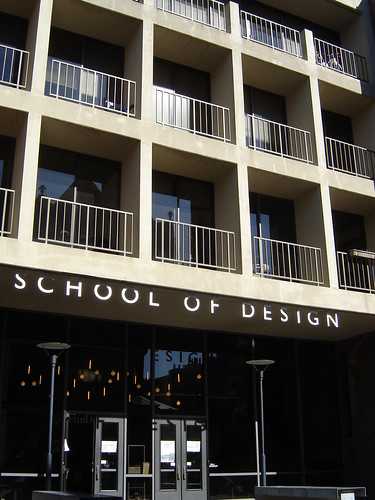
I spent last weekend at an openhouse at the School of Design at Penn. To be honest, Penn had been the school that I was least excited about, but I had a really great time. The facilities and the staff were awesome (the Planning Studio space is in Louis Kahn's old studio) and the quality of the students work was amazing. I also really liked Phily. I'd only spent a couple of days there before, and I only spent a few hours wandering around this time, but it's got a good vibe. A lot like Boston, but less stuck up.

I go back and forth between being freaked out that I won't get in anywhere and that I'm going to get in to to many schools and I won't be able to choose.

Anyway, my first application is due Dec 1st. I'm taking the GRE in 12 days. Ahhhhh.

Read more...

17.10.07

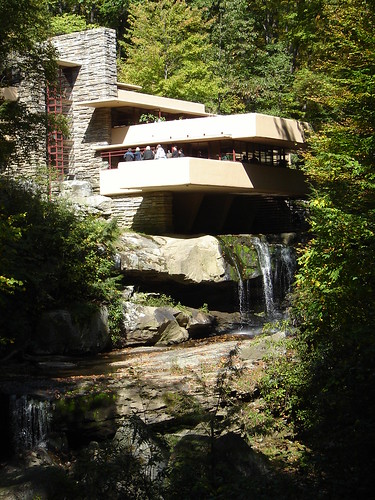
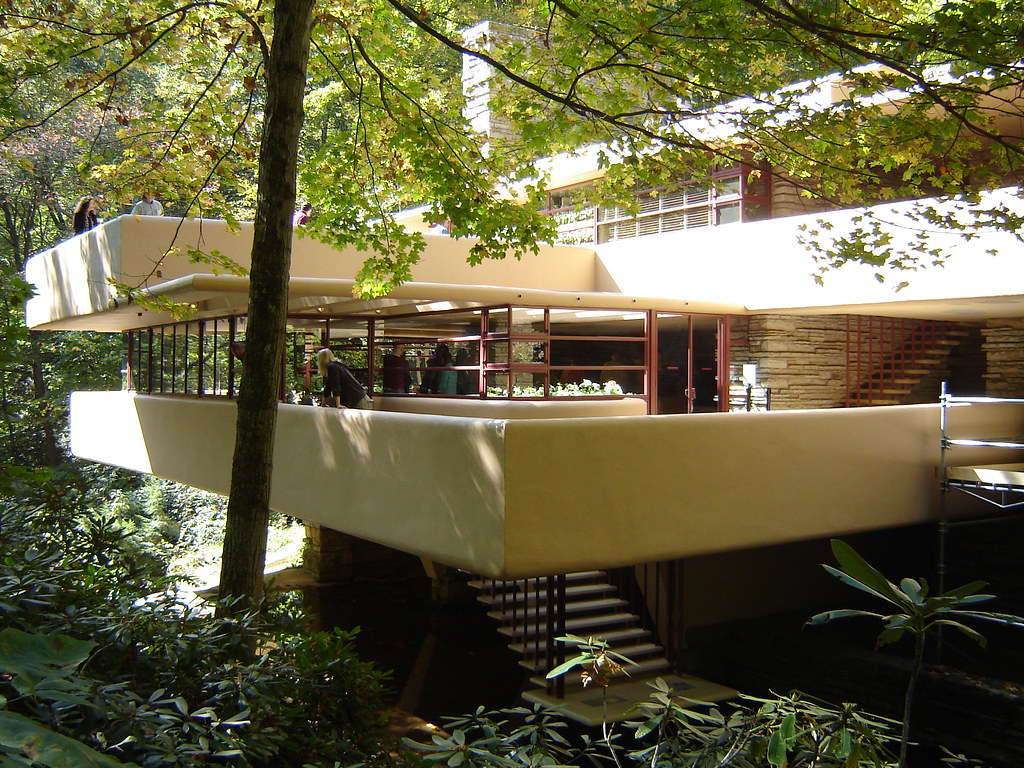
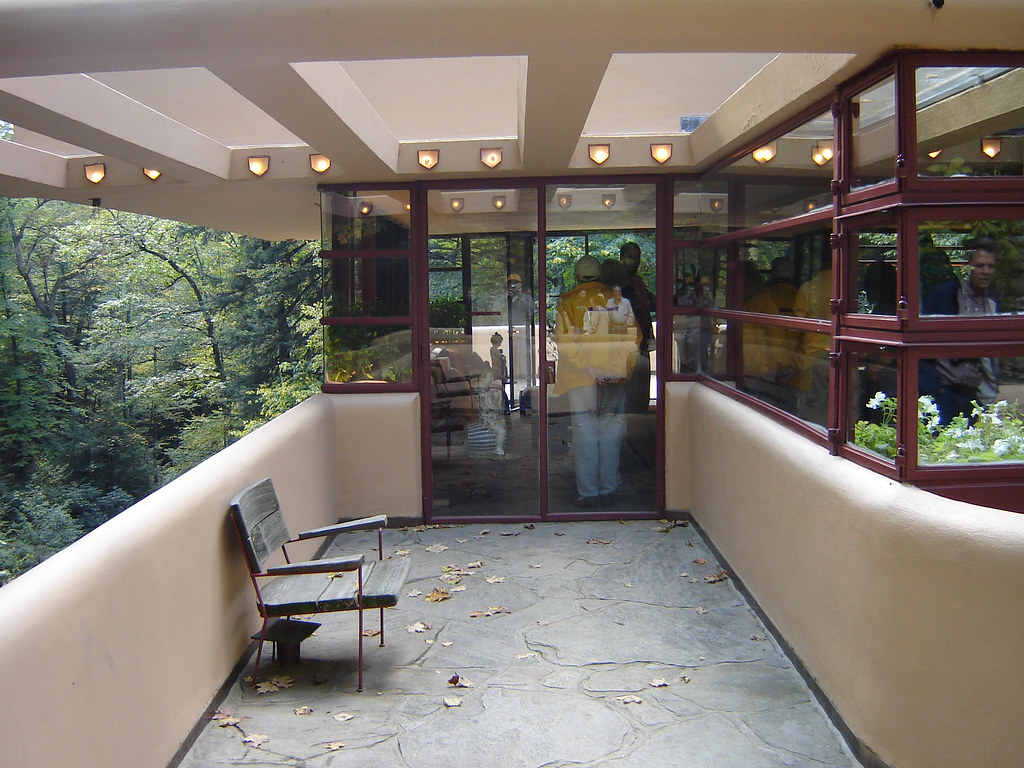
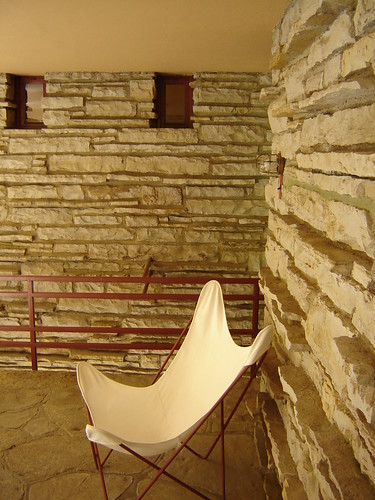
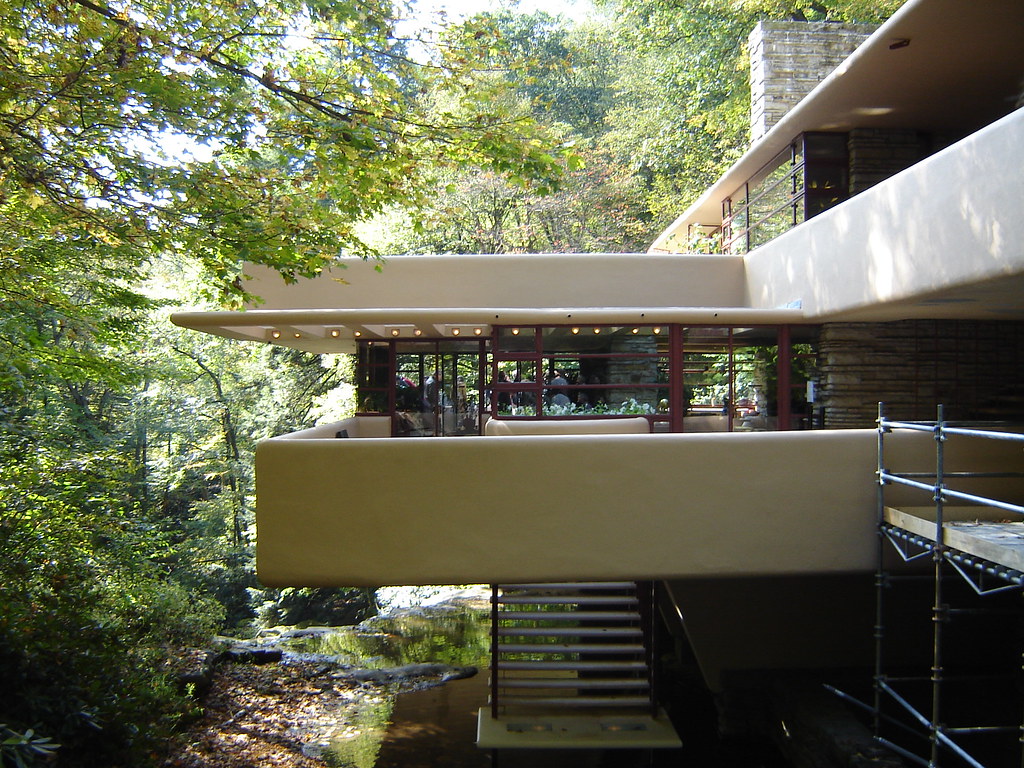
Photo Tour: Fallingwater

Fallingwater

Fallingwater

Fallingwater

Fallingwater

Fallingwater

Fallingwater

Read more...

13.10.07

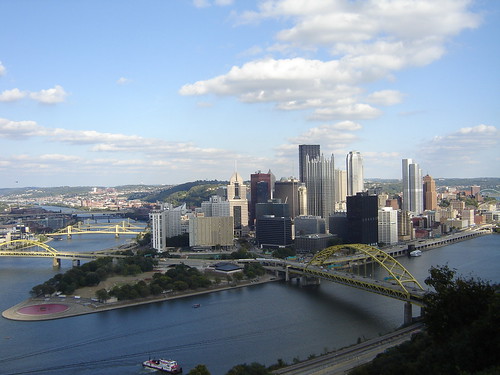
Pittsburgh is not what you thought...

Pittsburgh, Pennsylvania

There's a certain west coast city (that I've never had the opportunity to visit) that everyone talks about like it's a mythical Valhalla for urbanists. "There is light rail transit! The housing is so dense! The natural setting is so beautiful!" Now, I don't want to rail on Portland. Like I said, I've never been there, but I have to wonder, after having spent a day now in Pittsburgh: why is Portland so admired and Pittsburgh so demeaned? It's almost exactly same size. Pittsburgh's got the light rail. It's denser then Portland (2,100 to 1640 people per square kilometer). It's got a super cool location. It's even got better universities (Carnegie Mellon is rated 23rd in the country, one worse then Berkeley and one better then Georgetown). So why doesn't anybody know that? Is it all just the way that cities market themselves? Or is it age? Do Americans prefer a newer city?

Anyways, I'm enjoying my time here. The city's got good neighborhoods. Personally I like things a little bit skeezy, which Pittsburgh definitely has down. One thing I really like is that it's the sort of place that can have total dive bars and designer clothing stores on the same block. There's a good mix of shops and people. The residential architecture is mostly little, fairly undistinguished, but nice, rowhouses.

One of the best things is the location. It's kind of perched on the sides of a bunch of littlish mountains (more then Duluth, but less then Hong Kong). So basically, people just plopped houses wherever they could find enough flat land. There are these blocks where people have a huge cliff as a back yard, which gives it a lot of character.

Oh, and I finally did find a part of town that smelled (for reference: worse then East St. Paul, better then Gary, Indiana).

Today I basically wandered around neighborhoods. I like the South Side Flats a lot and the Mexican War Streets. Downtown is pretty nice. Oakland was kind of generic. Station Square sucks. The gate for the Pirate's stadium was open, so I wondered in and looked around. It seems really nice.

I also went to the Andy Warhol museum. It was pretty impressive. Warhol's images are so common that I don't think I ever really appreciated them before. When you are right in front of them, you can't help but be struck by both the scale and coloring. Its all so vulgar but beguiling. They also had a cool exhibit of Bruce Nauman, who works entirely in neon lights. My eyes didn't go back to normal for quite a while, but it was pretty cool.

Tomorrow, I'm going to see Frank Lloyd Wright's Fallingwater.

Read more...

12.10.07

First Impressions of Pittsburgh

1. It doesn't smell. I always imagined it smelled.

2. I have the distinctive feeling I'm not on a coast anymore. I don't know why.

3. It's layed out interestingly. Because of all the hills, it seems more like a bunch of little villages then a continuous urban space.

More later...

Read more...

2.10.07

We're Moving!!!

So, we've officially taken a new apartment. It's larger, and slightly closer to the center of the earth (which means we're keeping the same address, so no blog-name-change). Major pluses include a bedroom that's big enough for us to actually walk around the bed, a washer-dryer, a backyard, and enough space to have friends stay with us when they visit Boston (hint, hint). We're spending the next week or so painting and then moving slowly down.

In other news, ArchitectureBoston has an entire issue about Boston City Hall. Check it out. I especially like the article where several area architects reimagine how the building could be adapted for the future. My favorite is Moskow Architects design, which reminds me of my childhood idea of what Babylon's hanging gardens must have looked like.

Read more...

25.9.07

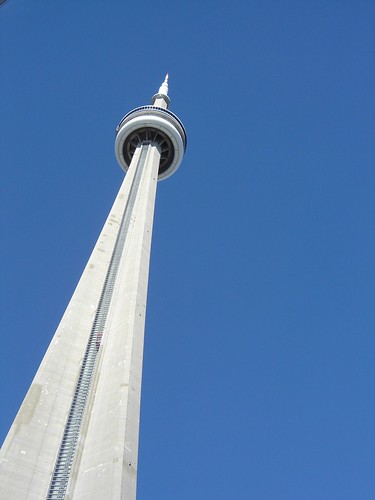
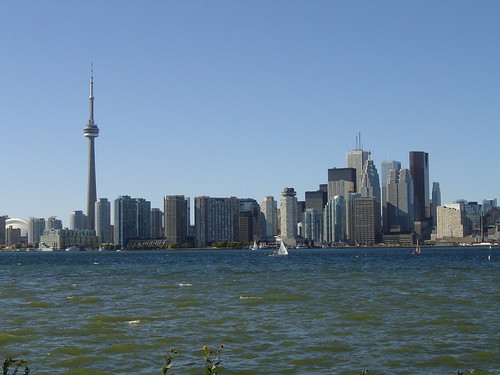
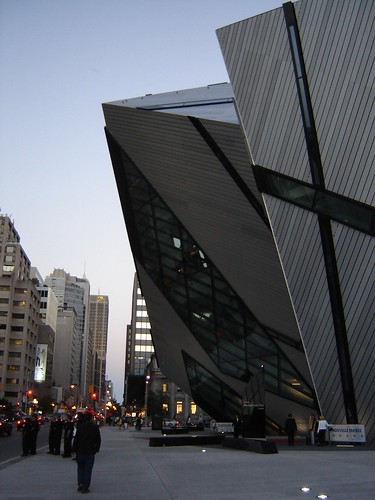
Toronto, Ontario

J and I are just back from TO.

We really liked it there... but then we stopped in Montréal for a day on our way back, so now I'm basically forcing myself to go back and justify why I liked it.

So, here are things I really liked about Toronto:

1. Streetcars. I really like subways, but having quiet, roomy streetcars running above ground is really awesome. I love being able to watch the city go by.

2. People. TO is all about the hipster (in a good way). People seem very political and activism driven. Just in the days we were there, there were protests for Native Treaty Rights and for a "don't ask, don't tell" policy in housing illegal immigrants. The demographics were really interesting. It seemed to be about 50% Asian.

3. Food.

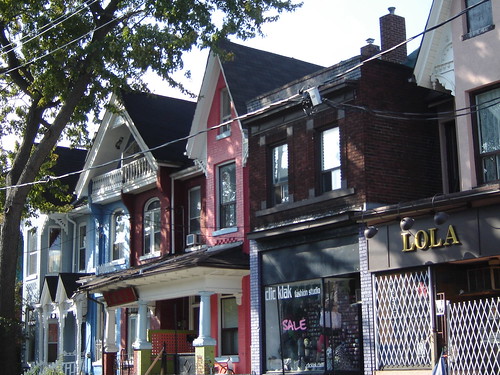
4. Neighborhoods. TO has a lot of great neighborhoods. The Annex was very cool. Kensington Market was unlike anything I've ever seen in the first world (it reminded me a little of the neighborhoods in Berlin that had been taken over by Anarchists. The Islands were also really cool.

Anyways. In a lot of ways it reminded my of a really nice Minneapolis. You get a major sense that the whole city is in a major state of change right now. It'd be an interesting place to live.

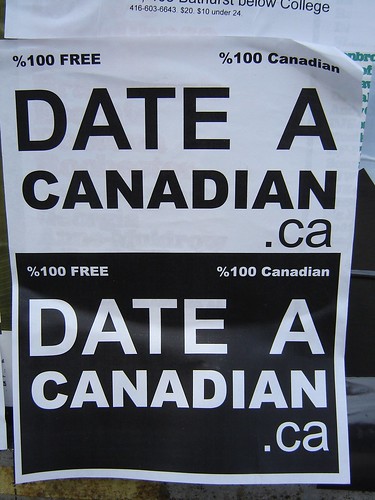
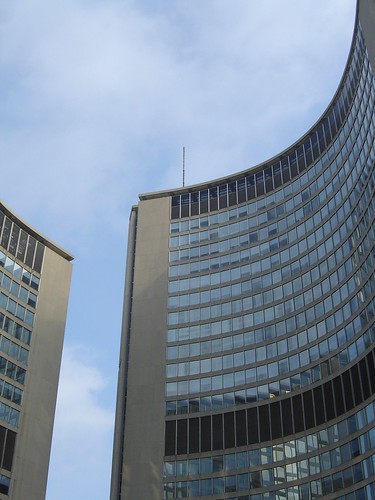
Toronto, Ontario

Toronto, Ontario

Toronto, Ontario

Toronto, Ontario

Toronto, Ontario

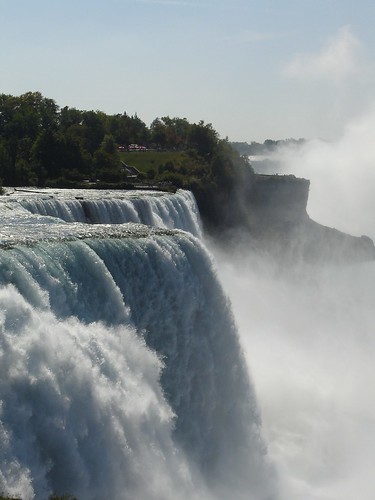
We also stopped at Niagara:

Niagara, Ontario/New York

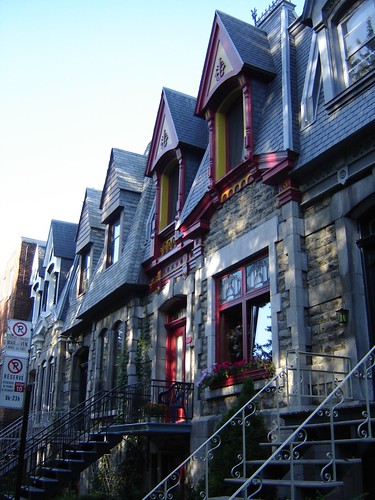
And in Montréal:

Montréal, Québec

Montréal, Québec

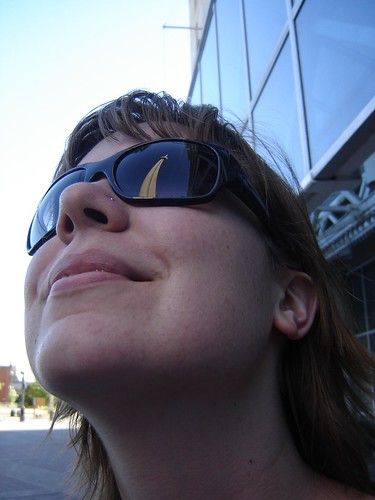
And J got her nose pierced!

Toronto, Ontario

Read more...

18.9.07

Month and a half without a blog post, huh. I assume that's long enough to ensure that no one is reading this anymore.

My official excuse is that my computer was broken for a few months and I didn't have money to fix it. Unofficially, it seems like everyone is getting pretty lazy about their blogs lately. I'm thinking it's just that facebook is easier/faster then actually having to come up with something to write, which is kind of too bad. Technology allows us to communicate faster and easier, but it also homogenizes the sort of discourse that we have until all we do is update our status and put up a different picture once and a while and post on everyone's wall for their birthdays. (I'm ranting).

Anyways, I promise (well, maybe not promise, that's kind of a strong word) that I'll be writing a little more on here now that my computer is ok.

I’m FINALLY in my last semester of semi-full-time undergraduate studenthood (it’s looking like I may need one more elective next semester to completely finish). I’m looking forward to finally being done my degree so I can go on to grad school. I’m for sure applying to University of Toronto, Harvard, University of Pennsylvania, University of British Colombia and UC Berkeley.

J and I are actually going out to Toronto this weekend to check out the city some (we’ve never been there before) so there should be some more posts and photos about that.

This wasn’t a very good post. I apologize. I’m rusty.

Read more...

  © Blogger templates The Professional Template by Ourblogtemplates.com 2008

Back to TOP